This afternoon I decided (for various reasons) that it would be a good idea to set up a Google alert for anything with my name, and found to my surprise that my Ancestry Expert Connect profile is still up on the internet! You can click here to read it.... Add Comment In our house, one of our favorite musicals to watch on DVD is The Music Man. Today when the mail came I started singing: O-ho the Wells Fargo Wagon is a-comin' down the street, Oh please let it be for me! O-ho the Wells Fargo Wagon is a-comin' down the street, I wish, I wish I knew what it could be! I just love it when the mail comes and I have genealogy records to open and drool over! Today in the mail I received a report and documents (a marriage and death record, and a will) from another researcher in London (yes, England) and a check for my first article for Archives.com, that I'd almost forgotten about. I used to wait for the mail hoping to receive letters from relatives, vital records from county courthouses in Michigan, and copies of obituaries from libraries all across the country. Now that I'm doing client research, I'm every bit as excited when I get a mailed (or emailed) response to a query I've sent out, providing vital information that can further my research, sometimes in very surprising ways. These are just some of the items I'm waiting for:
One thing I have learned in my 35+ years of genealogical research, and that is that you have to keep up with the times. Continuing education is absolutely vital, in order to learn about new records and resources, new ways of writing reports, major archeological finds (such as the Confederate Camp Lawton just discovered near Augusta, Georgia) and other genealogy news. Back in the olden days, I used to have to attend a genealogy society meeting or conference in order to hear lectures on subjects that interested me. Now, I can sit at home in my recliner and watch a webinar (web-based seminar) on just about any subject you can imagine. In the last two weeks I've watched webinars on organizing my genealogy files, finding my ancestors in historic newspapers, and how to to use Google+. And I learned something new with each one! If you're wondering how you can find out about these webinars, here is the place to go: GeneaWebinars is the "gathering place" for genealogy education. It lists upcoming webinars (free and paid) hosted by Legacy Family Tree, RootsMagic, Thomas MacEntee, DearMyrtle, and many others. Topics range from how to use DNA, where to find FamilySearch Wikis, finding your Revolutionary War ancestors, and using Second Life. There's even a webinar on How to Attend a Genealogy Webinar! So, whenever you have a few minutes, find a webinar to watch. You'll learn something new, I guarantee it! This is my professional, certification-bound, genealogy institute educated self talking to the enthusiastic hobbyist I was just a few years ago. If this applies to you, too - listen up! These are NOT valid sources!
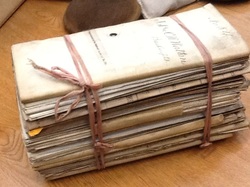
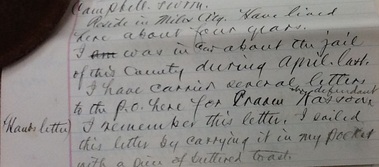
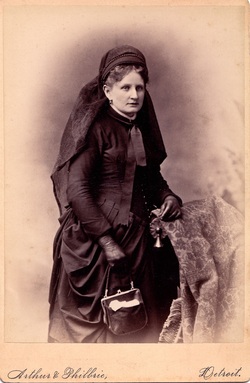
According to my grandfather's notes, after Mary Ellen Reed died in Florida in 1896, her husband James Lawrence Reed married again three more times. Living here in Washington State, I was especially intrigued by the family notes of his last marriage - to his first wife's youngest sister, Dora Curtis Phillips. According to Grandpa Reed (who would have been a young adult himself, and who probably heard his parents discussing it) James came out here to Seattle to marry Dora, and when the marriage didn't work out he returned to Michigan. When I was working at the Seattle Public Library, a couple of times I went upstairs to look through the old Seattle city directories, but I was hampered by not knowing what time period James was out here in this area, and by the fact that James Reed is a very common name. Then a couple of years ago, when I was exploring my new subscription to GenealogyBank, it occurred to me to try to find James and Dora Reed. First I found newspaper articles about the death of Dora's husband, James Phillips, in Olympia (not Seattle) in 1911. Then I tried the Olympia newspapers from 1911 to 1920, and found that James Reed and Dora Curtis Phillips married in 1913, and the story of their messy divorce was splashed all over the newspapers in 1915 and 1916. Some of the reporting (see the article below) was really flowery and hard to believe that some reporter wasn't making it up. Well, this really got up my curiosity! So I found directions to the Washington State Archives, and drove there one day, hoping to find the divorce records. Since I hadn't called ahead, I had to wait while the staff went down into the basement to retrieve the file. When she set it on the table in front of me, I was surprised to see that it was several inches thick, and dumbfounded when I opened it. There lying on the top were two hand-written letters by my great-great grandfather - one of them to Dora, and the other one to his brother-in-law Levander Curtis in Tacoma. Other interesting papers in the file were the court records of the divorce, which actually took place after James L. Reed had gone back to Beulah, Michigan, claiming that Dora had thrown him out of the house. There were affidavits taken by a notary public in Beulah, testimony of James' son Percy Reed, and Carl Tinkham, a family friend. Both of them testified that James Reed was a peaceful, home-loving man, and that all he had brought back with him from Olympia was his quilt, clothes, his shoemaking tools, and $50. Percy testified that he had known Dora for about 50 years, and she was "high tempered and quarrelsome." James said, "She constantly nagged me and wanted me to get out of the house and leave, saying amongst other things that I was an old gray headed devil, that I had better get out and go back to Michigan..." For her part, in the Thurston County Superior Court, Dora testified that "Defendant has been guilty of extreme cruelty against the Plaintiff in that he has at all times been extremely jealous....so jealous that he has not wanted friends of the Plaintiff to visit at the home, becoming angry when the Plaintiff spoke to and recognized friends on the street, has accused her of infidelity and unfaithfulness..." I think that James' letters were used against him in court, because the divorce was granted and Dora was given the house and land that they had purchased together, leaving James with nothing but his tools, dependent on his son for help. In his letter to his brother-in-law in Tacoma, James wrote, "but I am 75 and don't expect to have to stay anywhere much longer." He lived to be 98. All of this serves to emphasize how many records there are, in state and county and local archives, that are not online and perhaps never will be. The Washington Digital Archives is one of the best state archives websites in the country, but the marriage of James L. Reed and Dora Phillips is not recorded. If I hadn't gone to the Archives in person to search for the divorce records, I would never have found the letters and court papers telling the sad story of James and Dora. Back when I got all those papers of my grandfather's, one of them told an interesting story about his grandmother, Mary Ellen (Curtis) Reed, who died when my grandfather was about 5 years old. She had gone to Central Florida to visit her two daughters, Eliza Reed Ellett and Edith Reed Lamoreaux. Eliza became ill with blackwater fever (a serious complication of malaria) and died on April 2, 1896 at age 26. A week later her mother Mary Ellen Reed died, just five days short of her fiftieth birthday. They were buried together in Love Cemetery in Center Hill. Verifying this story was an entry in Grandpa's journal, dated March 27, 1958: "Went on to Center Hill, where my grandmother Reed and her daughter Eliza died and were buried 63 years ago. I wanted to see the graves and find out grandmother's first name. Eliza married Pelham Ellet and went to Florida with him to live. Lawrence was born of the union, and later she contracted blackwater fever. Her mother came down from Fennville, Mich. to care for her, caught the disease, and died nine days after her daughter. We found the cemetery very neat and well cared-for, a beautiful place. The inscriptions read: Elize Reed Ellet Apr 8 1869 Apr 2 1896 Gone but not forgotten Ella, beloved wife of James L. Reed Born Apr. 16, 1846 Died Apr 11, 1896 We found two other graves in the cemetery: Charles G. Lamoreaux 1861-1944 Edith Reed Lamoreaux 1866 - 1948 In August of 1975, on my way to Tallahassee to start my senior year of college, I drove through Central Florida to Sumter County, where Center Hill is located. I found the cemetery without too much trouble, and parked my VW under the Spanish Moss. I found the same graves that my Grandpa Reed had, but left without looking around any further. And in October 2008, when my daughter Stacy and I were in Florida for my high school reunion, we took a side trip to Center Hill (actually, two - because we couldn't find the cemetery the first time!). This time, because of all my research, I knew a little bit more about the family. Nonetheless, I was surprised and touched to find a grave for 1-year old Percy Lamoreaux, the son of Edith and Charles. He had died in April of 1895, just a year before Edith's sister and mother died. I imagine it was with mixed feelings of sorrow and joy that Edith took her sister's young son Lawrence to raise as her own. And there I thought the matter stood, until the other night when I looked again at the album I received last fall. With a rising sense of excitement, I noticed photographs that were obviously taken in Florida, among palm trees and orange groves. Then I looked closely at a photo of a steam roller called the Okeehumkee, and looked it up on the internet. It turns out that it was a well-known ship (there's a mural of it in the Florida House of Representatives) that traveled up and down the Oklawaha River in the 1890's in - Central Florida. This is the photo in my album, and there is a photo exactly like it in the Library of Congress photographic collection, here. And here's a photo that intrigues me - I think it's taken aboard the Okeehumkee, and perhaps it might be my great-great grandmother, Mary Ellen Reed. I think maybe she and her daughters took a pleasure trip before coming down with the fever. And as for Edith and Eliza, I believe I've found photographs of them, as well. This is one of the few labeled photos in the album, of my great aunt Edith Reed Lamoreaux, my great grandfather Percy Reed's sister, which was probably taken in Florida, between 1896 and 1910. In fact, I think it may have been taken in 1908, because on the page opposite is a photo of Lawrence Ellett and his cousin Orville Reed (my grandfather's brother). It had not occurred to me before, but obviously after Mary Ellen and Eliza died, the Michigan relatives continued to make the journey to Florida to keep in touch with Edith and Charles Lamoreaux and their nephew Lawrence. At some point they moved to Miami, where Charles died in 1944 and Edith four years later. And somehow in all of this, the album was left behind, to end up in someone's garage sale, and eventually to find its way back home to me. I'll start this post by saying that my family trees are online all over the place. Ancestry, TribalPages, MyHeritage, WikiTree, you name it. Whenever I hear of a new (free) family tree website where I can upload my GedCom, up it goes. I make sure all the living people in my tree are identified only as "living", but I want my ancestors out and about where other people (perhaps second, third and fourth cousins) can discover them and communicate with me. Even so, last October I was unprepared for an email that was forwarded to me by a distant cousin, who said, "Claudia - I believe this is your line." The forwarded email said: For anyone searching for the following names, I have a photo album that has the name R. A. Reed, Beulah, MI stamped in the inside front cover. It is loaded with old family photos including the following people: Herbert Reed (b. 1907, d. 1983), Orville Reed, R. A. Reed, Edith Reed Wolfe, and Maurice Reed. Jeanette Burton and Betty, 1950 on one photo. Ruby and Edith Reed, 1947. The outside of the photo album says, "Kodak, 1901, Miami, FL". Please contact me if you are part of this family. Well, of course I contacted her - she told me over email and on the phone that her father (a lover of antique shops and garage sales) had bought this photo album somewhere in the South (possibly Florida) about 20 years ago. I gave her my address and she shipped it to me. When I opened the box, there was an incredible treasure - photos of great-grandparents (and other relatives) that I had never seen before. First of all, the album had beautiful soft leather covers. On the front, as she had said, was carved Kodak and 1901, Miami, FL, along with a beach scene of palm trees and a sailboat. The back cover was carved with the initials MBR, which I puzzled over. Eventually I decided that they must stand for Mary Beem Reed, my Grandpa Maurice Reed's mother. While I had lots and lots of photos from the Reed side of the family, I had seen very few from the Beem side. Most of the photographs in this album are unlabeled, and so it's an exercise in detection to try to puzzle out who, when and where! This is the photo that clinched it for me - a family gathering, probably in Michigan, in the late 1890's or early 1900's. On the forward part of the picnic bench, sitting in the middle, is a little boy in a dark jacket and hat, that I'm pretty sure is my grandfather Maurice L. Reed. He was born in 1891, and if this photo was taken about 1900, the little girl in braids on the opposite side of the table, looking at the camera, could be his younger sister Edith, who was born in 1895. Here's another photo, which (I'm guessing) is of Maurice Reed's maternal grandparents, Albert and Aurilla (Lane) Beem. This would have been taken before 1903, when Albert died during Sunday morning worship, of a heart attack. Aurilla in this photo would have been about 50 or 60; and this woman looks too young for that. So, to formulate another hypothesis, maybe this is a photo of one of Mary Beem Reed's sisters. It could be Alice Maude Beem, born in 1864 and married to Bert John Olney. They had several children, who were about the same age as my grandfather. Hmmm - I think I'll try to track down some Olney descendants to see if they have any (labeled!) photos that we can compare. And here's another photo, I think taken on the same day as the dining room scene, of the same woman with her cat. The framed certificate on the wall fascinates me - I've already tried scanning & enlarging it, but it still can't be made out. It may be a baptismal certificate or a marriage record. There are many other photos in this album that I'll be examining closely and perhaps posting. I think I'll be tracking down other Beem descendants, as well as studying some of Maureen Taylor's books on identifying ancestors through clothing and hairstyles. And, of course, there is the question of why would a Michigan family have a photo album with "Miami" on the front cover? That's a story for another day! A couple of years ago I was exploring a branch of my family that had migrated out here to Washington from Michigan. My great-great grandmother Mary Ellen (Curtis) Reed's youngest sister Dora and her husband James Phillips moved from Cass County, Michigan to Olympia, Washington between 1900 and 1910, bring with them their children, Edith Mary and Perl. Edith married twice, and researching in the Washington Digital Archives, I discovered her second marriage was to Late F. Dixon, who was born about 1890. Just out of curiosity, I went looking for him and his parents on the 1900 census, and found them living in Battlement, Garfield County, Colorado. I did a double take when I saw the name of Late's brother - he was Early Dixon! Makes you wonder why parents choose the names they do! Back when I first got all those family papers from my grandfather, one of them, written on the back of a piece of scratch paper was a family tree of my grandmother's. Grandma Ruby's mother Rhoda Prosser was born in Hillsdale, Michigan in January 1860. According to this scrap of a family tree, Rhoda's father had been killed in the Civil War in 1863. Her mother was "killed by train" in 1883. Researching those two facts have taken me down fascinating trails in the last 35 years. I don't remember the first time I actually looked at census records on microfilm, but I'd be willing to bet that it wasn't till I got here to Seattle and got acquainted with the Seattle Public Library and the Seattle Branch of the National Archives, in the early 1980's. Until then, while I was living in Florida, I had to send written requests for census research to the National Archives in Washington, D.C. Since I was operating under the assumption that I was looking for a family named "Prosser" on the 1860, 1870 and 1880 census of Hillsdale, Michigan, I was very frustrated to keep getting notices that they couldn't be found. Sometime during those years, in looking at the 1870 census of Hillsdale (line-by-line), I found my great grandmother Rhoda Prosser living with her mother and stepfather, Rhoda and Henry Jones, who were also listed on the 1880 census of Hillsdale. At that point I was able to write to the Mitchell Memorial Library in Hillsdale to ask if they could find any record of my great-grandmother's death. What I received was a copy of the newspaper article in the Hillsdale Standard, every bit as shocking one hundred years later, as it was on the day it was printed: With this information I was able to send for Rhoda Jones' death certificate, which stated that she died from a fractured skull, and that her father's name was Robin Wilsey. On a research trip to Michigan in 2008, I was able to take a look at the original death register: It wasn't until I was planning this blog post the other day that it occurred to me that other Michigan newspapers might have picked up this tragic and puzzling story. I went to GenealogyBank, and entered Rhoda Jones for the year 1883, and sure enough, the papers in Kalamazoo and Jackson had reported it. The Jackson Citizen Patriot ran this article on June 8, 1883, with the coroner's findings that there was no evidence of blood on any engine or train, and although she had no shoes on, the stockings on her feet were not soiled or stained. Many times since getting the original article from the library in Hillsdale I have tried to imagine what happened that night. In addition to her husband Henry (who was a Civil War veteran), Rhoda had her 20-year old son Charles and 17-year old daughter Mary living in the house. Was it indeed suicide, or something more sinister? What do YOU think happened? Oddly enough (just one of the odd things about this odd case), James Terwilliger died just two days after the Oregon Circuit Court judge had declared that Philinda Terwilliger's will was a forgery. Another odd thing, that The Morning Oregonian commented on in 1894, was the "strange fatality which seemed to pursue individuals connected with it." Among those deceased were Julia Terwilliger Richardson, who died in the summer of 1892 (leaving her husband and sons to pursue the case), Judge Lorenzo Sawyer, John Orvis Waterman, "who testified that he wrote the will and that he saw Mrs. Terwilliger sign it", and three or four witnesses, who died before the case was appealed. As for James Terwilliger, when he died on September 1, 1892, his estate was worth almost $450,000. His will divided his estate between his children from his first marriage, Hiram Terwilliger and Charlotte Cartwright, and his grandchildren Frank and Thomas "Harry" Richardson. Hiram received 106 acres of the donation land claim and a portion of a lot in the city of Portland; Charlotte received "a quantity of land and a note for $3000". And, "subject to the payment and discharge of all costs, fees and charges not paid, arising out of the suit ... against James Terwilliger, Frank and Harry Richardson, children of Terwilliger's deceased daughter Julia, are made heirs to the one-third part of the donation land claim." (source: "James Terwilliger's Will", The Morning Oregonian, 6 Sep 1892; digital images, Newspaper Archives (http://infotrac.galegroup.com.ezproxy.kcls.org) The matter didn't end there, though. According to the news item published in The Morning Oregonian of April 21, 1894, the defendants (Julia's husband and sons) were not happy with the court's decision. As reported in the newspaper on 27 June 1894, they "are endeavoring to get the matter before the United States supreme court". And on February 8, 1895, the final decree was handed down, and as The Morning Oregonian reported, "This instrument was adjudged forged, false and void by the decree of this court" was stamped across the face of the will in red ink. Today, the Terwilliger land is well-known in Portland. James' heirs donated 19 acres of land in the form of a right-of-way through the Terwilliger property, to form the first of a "Park and Boulevard System of the City of Portland". Landscape architect James Olmsted began planning Terwilliger Boulevard in 1909. The Boulevard opened to automobiles in 1914, and electric lights illuminated the roadway. Today, Terwilliger Parkway is a pleasant drive, heavily wooded and seemingly far away from the city strife and traffic. It's come a long way from its first purchase by James Terwilliger (he traded a horse for this land in the 1840's), and the wrangling by his descendants over the forged will. His obituary ended with "He was a worthy pioneer, a good citizen, and a useful man." |


RSS Feed